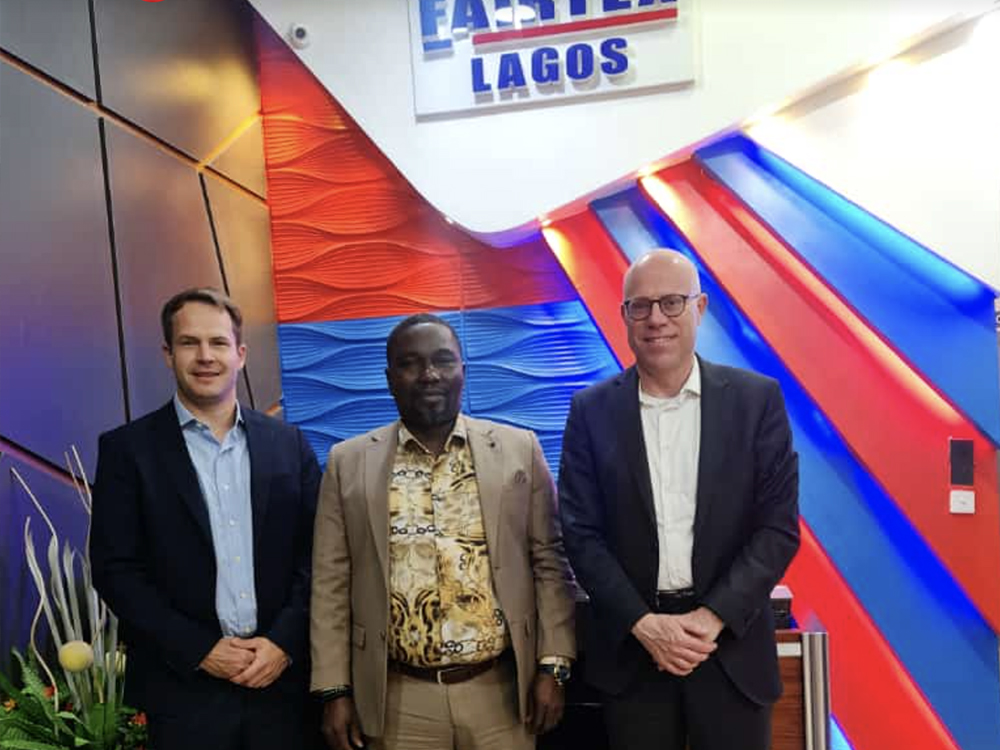
Strohm, the global manufacturer of fully bonded Thermoplastic Composite Pipe (TCP), has appointed Fairtex Group as its official local partner in Nigeria to support the supply and deployment of lightweight, corrosion-resistant pipeline solutions across oil, gas, and renewable energy operations in Africa.
Partnership Overview
The partnership establishes Fairtex Group as a local interface for the procurement, coordination, and delivery of TCP solutions developed by :contentReference[oaicite:0]{index=0}. The collaboration is positioned to improve accessibility to advanced composite pipe technologies within Nigeria’s upstream, midstream, and energy transition projects.
Thermoplastic Composite Pipe (TCP) is designed to address operational limitations commonly associated with conventional steel pipelines, particularly in corrosive environments, high-moisture offshore applications, and chemically aggressive service conditions.
Key issue: Conventional pipeline systems in West African oil & gas operations frequently face corrosion-driven degradation, leading to increased maintenance cycles, integrity risks, and unplanned shutdown exposure.
Technical Value of TCP in Field Applications
TCP technology offers a composite structure that eliminates metal-to-metal corrosion pathways, improving lifecycle performance in aggressive service environments. Its lightweight design also reduces installation complexity, particularly in offshore and swamp operations where logistics and lifting constraints are significant.
- Corrosion resistance in produced water and hydrocarbon service lines
- Reduced installation loads compared to steel piping systems
- Improved flexibility in constrained offshore layouts
- Lower lifecycle intervention requirements in integrity management programs
In integrity-sensitive environments, material selection is not a procurement decision alone—it is a long-term operational risk decision tied to uptime, inspection frequency, and failure exposure.
Fairtex Role in Nigeria
Under the agreement, Fairtex Group will support local engagement, inquiry handling, order coordination, and delivery facilitation for TCP systems across Nigeria and broader African markets. This positions Fairtex as a technical and commercial bridge between field operators and advanced composite pipe manufacturing capability.
The arrangement is particularly relevant for projects requiring corrosion mitigation strategies, weight reduction in offshore tie-ins, and improved installation efficiency in remote or logistically constrained environments.
Operational and Integrity Impact
From an integrity management perspective, the introduction of composite pipeline systems supports a shift toward reduced inspection burden and improved asset predictability. However, adoption still requires engineering validation, compatibility checks, and project-specific qualification protocols.
- Assess service conditions and chemical exposure profiles
- Validate compatibility with existing pipeline networks and tie-in points
- Integrate installation methodology into offshore execution planning
- Align integrity monitoring strategy with composite material behavior
Industry Context
Nigeria’s oil and gas infrastructure continues to operate in environments where corrosion remains a dominant degradation mechanism. As operators seek to optimize lifecycle cost and reduce downtime exposure, composite pipeline systems such as TCP are increasingly being evaluated as part of broader materials selection strategies.